
Somnath Temple Gujarat – Complete History & Travel Guide
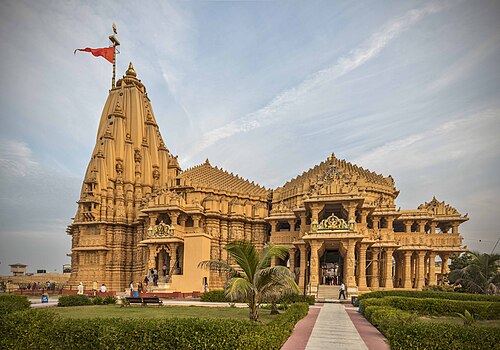
Somnath Temple – The Eternal Shrine of Lord Shiva on India’s Western Coast
Introduction
Standing proudly on the western coastline of Gujarat, where the Arabian Sea meets the sacred land of Prabhas Patan, Somnath Temple is one of the oldest and most revered Hindu temples in the world. More than a place of worship, it is a symbol of faith, resilience, devotion, and India’s timeless spiritual heritage.
For thousands of years, pilgrims from every corner of India and across the world have traveled to Somnath to seek the blessings of Lord Shiva. The temple is recognized as the first of the twelve sacred Jyotirlingas, making it one of the holiest pilgrimage destinations in Hinduism.
What makes Somnath truly extraordinary is not only its religious importance but also its remarkable history. Throughout the centuries, the temple has witnessed repeated destruction, countless invasions, and multiple reconstructions. Yet every time it was damaged, it rose again stronger than before, becoming a lasting symbol of unwavering faith and cultural resilience.
Today, Somnath Temple attracts millions of visitors every year—including devotees, historians, photographers, architecture enthusiasts, and international travelers who wish to experience one of India’s most iconic spiritual landmarks.
Its magnificent architecture, peaceful sea-facing location, ancient legends, and powerful spiritual atmosphere make Somnath much more than a temple. It is an unforgettable experience that connects visitors with thousands of years of Indian civilization.
Where is Somnath Temple Located?
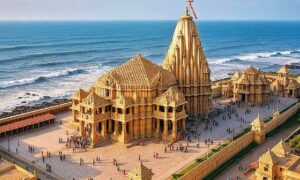
Somnath Temple is located in Prabhas Patan, a historic town in the Gir Somnath district of Gujarat, on the western coast of India.
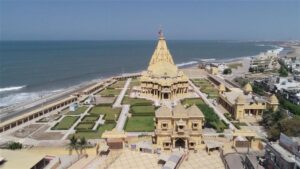
The temple overlooks the vast Arabian Sea, creating one of the most breathtaking settings for any religious monument in the country.
Approximate distances:
- Diu – 85 km
- Junagadh – 90 km
- Sasan Gir – 35-40km
- Rajkot – 200 km
- Ahmedabad – 410 km
Its strategic coastal location has made Somnath an important religious, cultural, and maritime landmark for centuries.
The Meaning of “Somnath”
The word Somnath comes from two Sanskrit words:
- Soma – the Moon God
- Nath – Lord or Protector
Together, Somnath means “Lord of the Moon.”
According to Hindu mythology, the temple is directly connected to the Moon God (Chandra), whose story forms one of the most famous legends associated with Lord Shiva.
The Ancient History of Somnath Temple
Somnath Temple is believed to be among the oldest continuously revered places of worship in India. References to the temple appear in ancient Hindu scriptures, including the Skanda Purana, Shiva Purana, and other traditional texts.
According to Hindu tradition, the original shrine was built by Chandra (the Moon God) entirely in gold after he received Lord Shiva’s divine blessings.
Later, it is believed that:
- Ravana rebuilt the temple in silver.
- Lord Krishna rebuilt it in sandalwood.
- King Bhimdev later reconstructed it in stone.
These accounts belong to Hindu religious tradition and symbolize the temple’s enduring spiritual importance through different ages.
Historically, Somnath also flourished as a prosperous pilgrimage center because of its location near ancient trade routes along India’s western coastline. Travelers, saints, scholars, and merchants frequently visited the temple, contributing to its cultural significance.
Why is Somnath Called the First Jyotirlinga?
Among all the sacred shrines dedicated to Lord Shiva, Somnath holds a unique position as the first Jyotirlinga.
In Hindu belief, a Jyotirlinga represents the infinite, radiant form of Lord Shiva. The word itself combines:
- Jyoti – Divine Light
- Linga – Symbolic representation of Lord Shiva
According to the Shiva Purana, there are twelve principal Jyotirlingas across India, each representing a different manifestation of Shiva’s divine presence.
Somnath is traditionally regarded as the first among them, making it one of the most sacred pilgrimage destinations for Shaivites.
For millions of devotees, visiting Somnath is not merely a religious journey but a deeply spiritual experience that symbolizes the beginning of a sacred connection with Lord Shiva.
The Legend of Chandra (Moon God)
The story of Somnath begins with Chandra, the Moon God.
According to Hindu mythology, Chandra married the twenty-seven daughters of King Daksha. However, he showed special affection toward one wife, Rohini, while neglecting the others.
Feeling insulted, Daksha cursed Chandra, causing him to gradually lose his brilliance and strength. As the curse took effect, darkness spread across the heavens, affecting both nature and human life.
Seeking relief, Chandra consulted sages, who advised him to perform intense penance and worship Lord Shiva at the sacred site now known as Somnath.
Moved by Chandra’s devotion, Lord Shiva appeared before him and partially lifted the curse. Instead of restoring Chandra permanently, Shiva ordained that the Moon would periodically wax and wane. This divine decree explains the lunar cycle observed each month.
Out of gratitude, Chandra built a magnificent temple dedicated to Lord Shiva and named Him Somnath—the Lord of the Moon.
This timeless legend continues to inspire millions of devotees who believe that sincere prayer, humility, and devotion can transform even the greatest hardships into hope and renewal.
Somnath in Hindu Scriptures
Somnath is mentioned in several revered Hindu texts and has long been regarded as one of the most sacred pilgrimage sites in India.
Ancient scriptures describe Prabhas Patan as a spiritually significant region where sages performed penance, kings sought divine blessings, and countless devotees worshipped Lord Shiva.
The area is also associated with the final earthly moments of Lord Krishna, adding another layer of religious importance to the region. Because of these connections, many pilgrims combine visits to Somnath Temple with nearby sites linked to Krishna’s life and legacy.
Over the centuries, Somnath has remained a place where mythology, history, faith, and cultural heritage come together, offering visitors a profound glimpse into India’s enduring spiritual traditions.
The Remarkable Story of Destruction and Reconstruction
The history of Somnath Temple is unlike that of any other temple in India. Over the course of many centuries, it faced repeated attacks, destruction, and rebuilding. Yet, every reconstruction reflected the determination of devotees and rulers to preserve one of Hinduism’s most sacred shrines.
Because of its immense religious significance and historical wealth, Somnath became a target during different periods of history. Despite these challenges, the temple’s spiritual identity remained intact, and each generation contributed to restoring it.
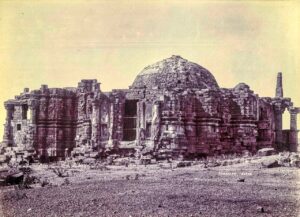
One of the most widely discussed events took place in the early eleventh century when Mahmud of Ghazni, a ruler from present-day Afghanistan, launched an expedition into western India. Historical records describe that he attacked Somnath in 1025 CE, causing extensive damage to the temple and carrying away valuable treasures.
Different historical sources provide varying details about this event, but historians generally agree that the temple suffered major destruction during this period.
What makes Somnath truly extraordinary is what happened afterward.
Instead of disappearing into history, the temple was rebuilt by local rulers and devotees who believed that faith could never be destroyed by physical attacks.
Throughout later centuries, Somnath experienced additional periods of damage and restoration under different political powers. Each reconstruction became a symbol of resilience rather than defeat.
Today, Somnath stands as a reminder that spiritual traditions can survive even the most difficult moments in history.
The Modern Reconstruction of Somnath Temple
Following India’s independence in 1947, national leaders recognized the cultural and spiritual importance of restoring Somnath Temple.
One of the strongest supporters of this vision was Sardar Vallabhbhai Patel, India’s first Deputy Prime Minister and Home Minister.
During a visit to Somnath, Patel expressed his desire that the ancient temple should once again stand in all its dignity. He believed that rebuilding the temple would symbolize the revival of India’s cultural heritage after centuries of foreign rule.
Although Sardar Patel passed away before the temple was completed, his vision continued under the leadership of the Somnath Trust.
The present temple was constructed using traditional architectural principles while maintaining historical authenticity.
On 11 May 1951, the temple was ceremonially consecrated in the presence of Dr. Rajendra Prasad, the first President of India.
Since then, Somnath has continued to serve as one of India’s most important pilgrimage destinations, welcoming millions of visitors every year.
Architecture of Somnath Temple
The present Somnath Temple is a magnificent example of Chaulukya (Solanki) style architecture, a traditional architectural style that flourished in western India.
Every part of the temple has been designed according to ancient Hindu architectural principles that combine artistic beauty with spiritual symbolism.
The temple is constructed primarily from beautiful sandstone, giving it a timeless appearance while ensuring durability against the coastal climate.
Its graceful carvings, balanced proportions, and towering spire demonstrate the remarkable craftsmanship of Indian temple builders.
Rather than overwhelming visitors with excessive decoration, the architecture creates a sense of dignity, harmony, and sacredness.
Every stone reflects centuries of artistic tradition and devotional dedication.
The Majestic Shikhara
One of the first features visitors notice is the temple’s impressive Shikhara, or central tower.
Rising approximately 50 meters (about 155 feet) above the sanctum, the Shikhara dominates the skyline and serves as a powerful symbol of spiritual ascent.
At the top of the temple flies a large sacred flag that is changed several times each day according to long-standing temple traditions.
The continuously waving flag represents the eternal presence of Lord Shiva and has become one of Somnath’s most recognizable symbols.
The Garbhagriha (Sanctum Sanctorum)
The spiritual heart of Somnath Temple is its Garbhagriha, or inner sanctum.
Here, devotees worship the sacred Jyotirlinga, representing the infinite and formless nature of Lord Shiva.
The sanctum is intentionally simple and peaceful.
Soft lighting, devotional chants, incense, and the fragrance of flowers create an atmosphere of deep meditation.
Visitors often describe entering the Garbhagriha as one of the most emotional moments of their pilgrimage.
For countless devotees, standing before the Jyotirlinga brings a profound sense of peace, humility, and spiritual connection.
The Baan Stambh – The Arrow Pillar
One of the most fascinating features of Somnath Temple is the Baan Stambh, also known as the Arrow Pillar.
Located beside the temple facing the Arabian Sea, this pillar carries a remarkable inscription stating that there is no landmass directly between this point and Antarctica along a straight line across the ocean.
The pillar symbolizes the temple’s position on India’s western coastline and has become an iconic attraction for visitors.
Standing near the Baan Stambh while watching the endless Arabian Sea creates one of the most memorable experiences at Somnath.
Spiritual Importance of Somnath Temple
Somnath is not only one of India’s oldest temples but also one of its most spiritually significant.
For followers of Lord Shiva, visiting the first Jyotirlinga is considered an important milestone in their spiritual journey.
Devotees believe that worshipping at Somnath helps cultivate inner peace, self-discipline, and devotion.
The temple attracts people from every region of India as well as international visitors interested in India’s rich spiritual traditions.
Many pilgrims begin their Jyotirlinga pilgrimage with Somnath because of its traditional status as the first among the twelve sacred shrines.
Daily Worship and Temple Rituals
Temple worship follows ancient traditions that have been preserved for generations.
Every day begins before sunrise with sacred rituals performed by experienced priests.
The major ceremonies include:
Mangala Aarti
The first prayer of the day welcomes Lord Shiva with devotional hymns, lamps, and sacred chants.
Morning Abhishekam
The Jyotirlinga is ceremonially bathed using water, milk, curd, honey, clarified butter, and other sacred offerings.
These rituals symbolize purity, gratitude, and devotion.
Midday Worship
Fresh flowers, Bilva (Bael) leaves, fruits, incense, and traditional offerings are presented to Lord Shiva while Vedic mantras are recited.
Evening Aarti
As the sun sets over the Arabian Sea, the temple comes alive with bells, conch shells, lamps, and devotional singing.
Many visitors consider the evening Aarti one of the most spiritually uplifting experiences in Somnath.
The combination of the sea breeze, temple bells, and glowing lamps creates an unforgettable atmosphere.
Major Festivals Celebrated at Somnath
Throughout the year, Somnath hosts several important Hindu festivals that attract lakhs of devotees.
Mahashivratri
Mahashivratri is the temple’s biggest annual celebration.
Thousands of devotees remain awake throughout the night, offering prayers, chanting “Om Namah Shivaya,” and participating in special worship ceremonies dedicated to Lord Shiva.
Shravan Month
The holy month of Shravan is considered especially sacred for Shiva devotees.
Pilgrims from across India visit Somnath to perform Abhishekam and seek blessings during this auspicious period.
Kartik Purnima
This festival brings another wave of devotees who gather for special prayers and religious ceremonies.
Diwali
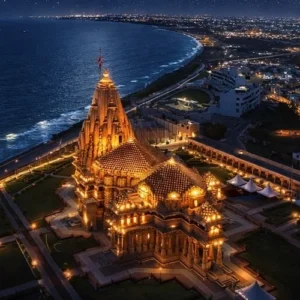
The temple is beautifully illuminated with thousands of lights, creating a breathtaking spiritual atmosphere.
Somvati Amavasya
Whenever the new moon falls on a Monday, thousands of additional pilgrims visit Somnath because this day is considered especially auspicious for worshipping Lord Shiva.
The Peaceful Arabian Sea Experience
One of Somnath Temple’s most distinctive features is its location beside the Arabian Sea.
After offering prayers, many visitors spend time along the temple promenade, listening to the rhythmic sound of ocean waves.
The endless horizon creates a feeling of calm and reflection, making Somnath not only a place of worship but also a destination for inner peace.
Watching the sunset behind the temple is an unforgettable experience that beautifully combines nature, spirituality, and history.
Temple Timings
Somnath Temple welcomes devotees every day of the year.
General Temple Timings
| Activity | Time |
|---|---|
| Temple Opens | 6:00 AM |
| Temple Closes | 10:00 PM |
For the latest temple timings, darshan information, and official announcements, visitors can visit the Official Shri Somnath Trust website. https://somnath.org
Daily Aarti Timings
The temple conducts three major Aartis every day.
| Aarti | Time |
|---|---|
| Morning Aarti | 7:00 AM |
| Midday Aarti | 12:00 PM |
| Evening Aarti | 7:00 PM |
These ceremonies are among the most spiritually uplifting experiences for visitors.
Sound and Light Show
Every evening, the temple hosts an impressive Sound and Light Show that narrates the remarkable story of Somnath through music, lighting effects, and storytelling.
The presentation explores:
- Ancient history
- Hindu mythology
- Repeated reconstruction
- Spiritual importance
- India’s cultural heritage
It is highly recommended for first-time visitors.
Best Time to Visit Somnath Temple
Although Somnath can be visited throughout the year, some seasons offer a more comfortable experience.
October to March (Highly Recommended)
This is considered the best season due to pleasant weather.
Ideal for:
- Temple visits
- Photography
- Sightseeing
- Beach walks
- Family vacations
July to September (Monsoon)
The surrounding region becomes lush and green.
Travelers should check weather conditions before planning long road trips.
April to June (Summer)
Summers can be quite hot.
Early morning and evening visits are recommended.
How to Reach Somnath Temple
By Air
Nearest Airports:
- Diu Airport
- Rajkot International Airport
- Keshod Airport
By Train
Nearest Railway Station:
- Somnath Railway Station
Other nearby stations:
- Veraval Junction
- Junagadh Junction
By Road
Excellent highways connect Somnath with:
- Ahmedabad
- Rajkot
- Junagadh
- Dwarka
- Diu
- Sasan Gir
Regular buses and private taxis are available.
Explore more spiritual and cultural destinations across the state through the Gujarat Tourism official website.
https://www.gujarattourism.com
Nearby Attractions
Bhalka Tirth
According to Hindu tradition, this is the sacred place where Lord Krishna was struck by an arrow before leaving His earthly form.
Triveni Sangam
A holy confluence where three rivers are traditionally believed to meet before flowing into the Arabian Sea.
Pilgrims often perform rituals and offer prayers here.
Dehotsarg Tirth
This sacred location is associated with the final earthly moments of Lord Krishna and is considered one of the most important pilgrimage sites near Somnath.
Gita Mandir
Built in honor of Lord Krishna, this temple features beautifully engraved verses from the Bhagavad Gita.
Panch Pandav Gufa
A peaceful cave traditionally associated with the Pandavas during their exile.
Somnath Beach
Located beside the temple, the beach offers spectacular sunset views over the Arabian Sea.
Gir National Park
Approximately 40 km away.
Perfect for wildlife lovers interested in seeing the famous Asiatic Lion.
Tulsi Shyam Temple
Approximately 110 km away.
Tulsi Shyam Temple – A Sacred Sanctuary of Lord Krishna in the Heart of Gir Forest, Gujarat
Gir Kankai Mataji Temple
Gir Kankai Mataji Temple – A Hidden Spiritual Gem in Gujarat
Accommodation Near Somnath
Visitors can choose from:
- Budget Hotels
- Mid-range Hotels
- Luxury Hotels
- Guest Houses
- Dharamshalas
Many accommodations are located within walking distance of the temple.
Local Food
Somnath offers excellent vegetarian cuisine.
Popular dishes include:
- Gujarati Thali
- Khichdi
- Kadhi
- Thepla
- Bajra Rotla
- Sev Tameta
- Undhiyu
- Dhokla
- Khandvi
- Jalebi
- Fafda
Fresh coconut water and local sweets are also widely available.
Travel Tips
- Wear modest clothing.
- Remove footwear before entering the temple.
- Mobile phones and cameras are generally not permitted inside the main temple complex.
- Carry a valid ID.
- Visit early morning to avoid crowds.
- Stay hydrated during summer.
- Respect temple customs.
- Help maintain cleanliness.
- Follow instructions from temple authorities.
20 Interesting Facts About Somnath Temple
- Somnath is the first of the twelve Jyotirlingas.
- It is believed to be over a thousand years old in continuous tradition.
- The temple overlooks the Arabian Sea.
- Chandra (the Moon God) is traditionally credited with establishing the first shrine.
- Somnath has been rebuilt multiple times throughout history.
- The present temple was inaugurated in 1951.
- Sardar Vallabhbhai Patel played a key role in its modern reconstruction.
- The temple follows Chaulukya architectural style.
- The Baan Stambh points toward the southern ocean with no landmass directly in between until Antarctica.
- The temple flag is changed several times every day.
- Millions of pilgrims visit annually.
- Mahashivratri is the biggest festival celebrated here.
- Somnath is located in Prabhas Patan.
- The temple is maintained by the Shri Somnath Trust.
- Evening Aarti attracts thousands of devotees daily.
- The temple is close to several sites associated with Lord Krishna.
- The Sound and Light Show narrates its history.
- The temple is one of Gujarat’s most visited spiritual landmarks.
- Somnath combines history, mythology, architecture, and spirituality in one destination.
- It continues to inspire devotees from around the world.
📌 Quick Information
| Information | Details |
|---|---|
| Temple Name | Somnath Temple |
| Dedicated To | Lord Shiva |
| Location | Prabhas Patan, Gir Somnath, Gujarat, India |
| Temple Type | Jyotirlinga |
| Established | Ancient (Mentioned in Hindu Scriptures) |
| Famous For | First Jyotirlinga of Lord Shiva |
| Best Time to Visit | October to March |
| Entry Fee | Free |
| Photography | Restricted inside the temple |
| Dress Code | Modest Traditional Clothing Preferred |
Frequently Asked Questions (FAQ)
Why is Somnath Temple famous?
Somnath Temple is famous as the first Jyotirlinga of Lord Shiva and for its long history of reconstruction, remarkable architecture, and deep spiritual significance.
Where is Somnath Temple located?
It is located at Prabhas Patan in the Gir Somnath district of Gujarat, India.
Which deity is worshipped here?
Lord Shiva is worshipped in the form of the sacred Jyotirlinga.
What is the best time to visit?
October to March offers the most pleasant weather.
Is there an entry fee?
No. Entry to the temple is free.
Is photography allowed?
Photography is generally restricted inside the main temple complex. Visitors should follow current temple regulations.
How much time should visitors spend?
Most travelers spend between two and four hours exploring the temple and nearby attractions.
Is Somnath suitable for international visitors?
Yes. The temple is one of India’s most important cultural and spiritual landmarks and welcomes visitors from around the world.
Conclusion
Somnath Temple is far more than an ancient monument. It is a living symbol of faith, resilience, devotion, and India’s enduring spiritual heritage.
Standing beside the Arabian Sea, the temple has witnessed centuries of history while continuing to inspire millions of pilgrims and travelers every year. Its sacred Jyotirlinga, magnificent architecture, legendary origins, and remarkable story of reconstruction make it one of the most extraordinary religious destinations in the world.
Whether you visit to seek Lord Shiva’s blessings, explore India’s rich history, admire traditional temple architecture, or simply experience the peaceful atmosphere of Gujarat’s western coastline, Somnath offers an unforgettable journey that touches both the mind and the soul.
A visit to Somnath is not just a pilgrimage—it is an opportunity to connect with one of the oldest spiritual traditions in human civilization. Every prayer, every wave of the Arabian Sea, and every stone of the temple reminds visitors that faith has the power to endure through time, inspiring generations with hope, courage, and devotion.
Learn more about India’s rich cultural heritage on the Incredible India official tourism portal. https://www.incredibleindia.gov.in